How to Spot a Scam Text Before It Costs You Money
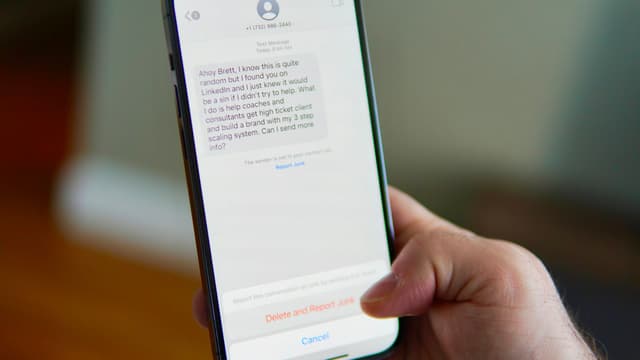
Scam texts have become one of the most common ways criminals reach people. They are cheap to send, easy to disguise and land right in your pocket, often looking just like the real alerts you get from your bank or delivery service.
The good news: nearly all of them follow a small number of patterns. Once you know those patterns, most scam texts become easy to spot.
The most common scam texts
The Federal Trade Commission has warned repeatedly about the same handful of text scams. Here is what each one looks like.
Unpaid toll
What it says: You owe a small amount for an unpaid toll and must pay right away to avoid late fees or penalties. A link leads to a payment page.
What's really going on: Scammers pose as toll agencies in many states. The link goes to a fake site built to steal your card number or personal information. The FTC's alert on unpaid toll texts advises not clicking and instead checking your account through the toll agency's real website or phone number. Similar texts now claim to come from state motor vehicle agencies about unpaid traffic tickets.
Package delivery problem
What it says: A package could not be delivered because of an address problem or unpaid fee. Click to reschedule or pay.
What's really going on: The link leads to a fake page that asks for a small "redelivery fee" and your card details. The U.S. Postal Inspection Service says USPS will not text you unless you first signed up for tracking with a tracking number, and those texts will not contain a link. Track packages by going directly to the carrier's website or app.
Bank or retailer fraud alert
What it says: There is suspicious activity on your account, or a large purchase needs your approval. Reply YES or NO, or call a number to talk to the "fraud department."
What's really going on: If you respond, you are connected to scammers posing as your bank or a big retailer. According to the FTC, they may claim all your money is at risk and pressure you to move it to a "safe" account they control. Treat any request to move your money somewhere to keep it safe as a sure sign of a scam.
The "wrong number" text
What it says: Something friendly and seemingly misdirected, like "Hi, is this Amanda? Are we still on for dinner?"
What's really going on: This is often the opening of a long con sometimes called "pig butchering." If you reply to say they have the wrong number, the sender apologizes and keeps chatting. Over days or weeks, they build a friendship or romance, then introduce an investment opportunity, usually in cryptocurrency. The FBI describes this pattern in its guidance on cryptocurrency investment fraud. The investment platform is fake, and the "profits" you see on screen are not real. When you try to withdraw, you are asked for more money in fees or taxes.
The surprise job offer
What it says: A recruiter has seen your résumé and has a flexible remote job with great pay. Reply to learn more, or move the conversation to WhatsApp or Telegram.
What's really going on: Many of these are "task scams," where you are paid small amounts at first for simple online tasks like rating products, then asked to deposit your own money, often in cryptocurrency, to unlock bigger earnings. The FTC's job offer text alert is blunt: never pay to get paid. Real employers do not recruit by unexpected text.
The red flags they share
Whatever the story, scam texts tend to have the same warning signs:
- It is unexpected. You did not sign up for alerts or start the conversation.
- It creates urgency. Pay now, act within 24 hours, or face a fee, penalty or account freeze.
- It includes a link or a number to call. Legitimate companies generally will not ask for your account information by text.
- It asks for money or personal details, such as your card number, Social Security number, passwords or one-time codes.
- It wants unusual payment, such as gift cards, wire transfers, payment apps or cryptocurrency.
- The link looks slightly off. Look for misspellings, extra words or odd endings in the web address.
- It moves you to another app. Requests to switch to WhatsApp, Telegram or another messaging app are a common tactic.
- It seems too good to be true, like easy money, guaranteed returns or a prize you never entered to win.
What to do when you get one
- Don't click any links. Even opening a link can lead to a fake site or unwanted software.
- Don't reply, not even "STOP" or "wrong number." Replying confirms your number is active.
- Verify independently. If you think the message might be real, contact the company using a phone number or website you already know is legitimate, such as the number on the back of your card. Never use the contact details in the text.
- Report it, then delete it.
How to report a scam text
Reporting helps phone companies block similar messages and helps law enforcement track scammers. The FTC recommends these steps on its page about spam text messages:
- Forward the text to 7726 (which spells SPAM). This sends it to your wireless provider so it can spot and block similar messages.
- Use your phone's "report junk" option in your messaging app.
- Report it to the FTC at ReportFraud.ftc.gov.
For cryptocurrency investment or other online fraud, you can also file a complaint with the FBI's Internet Crime Complaint Center at ic3.gov. Be wary of anyone who later contacts you offering to recover lost money, including people posing as law enforcement or law firms. The FBI warns that these recovery offers are often a second scam.
If you already clicked or paid
Act quickly. Speed can make a difference.
- Call your bank or card issuer using the number on your card. Report the charge and ask about stopping or reversing the payment.
- Change passwords on any account you entered on the fake site, and turn on two-step verification.
- If you gave out your Social Security number, visit IdentityTheft.gov for a personalized recovery plan, and consider freezing your credit at all three bureaus.
- Watch your accounts closely for charges you do not recognize.
- Report what happened to the FTC and, if money was lost online, to the FBI's IC3.
Cut down on scam texts
You cannot stop every scam text, but you can reduce how many reach you:
- Turn on spam filtering in your phone's settings. Both iPhone and Android offer options to filter messages from unknown senders.
- Ask your wireless carrier about free tools to block spam texts and calls.
- Be careful where you share your number, especially on contest entries and online forms.
The bottom line
Scam texts work by catching you off guard and rushing you. Slow down. If a message is unexpected, urgent and asks you to click, call or pay, assume it is a scam until you verify it through a source you trust. Don't reply, forward it to 7726, report it at ReportFraud.ftc.gov and delete it.
This article is general information, not legal or financial advice.